Remembering Tom Conroy
insiya dhatt
June 16, 1952 – November 11, 2025
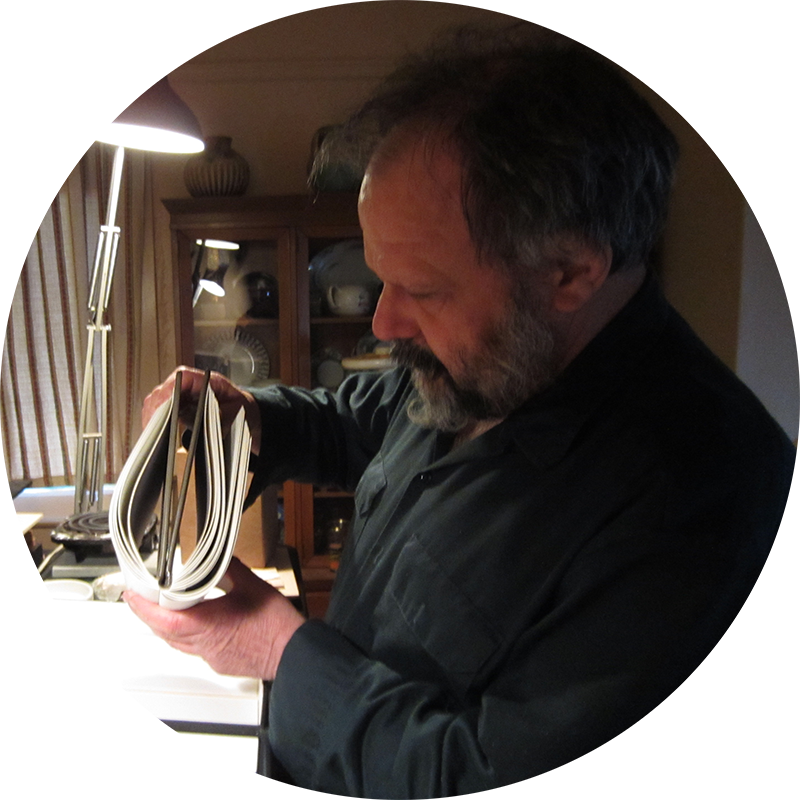
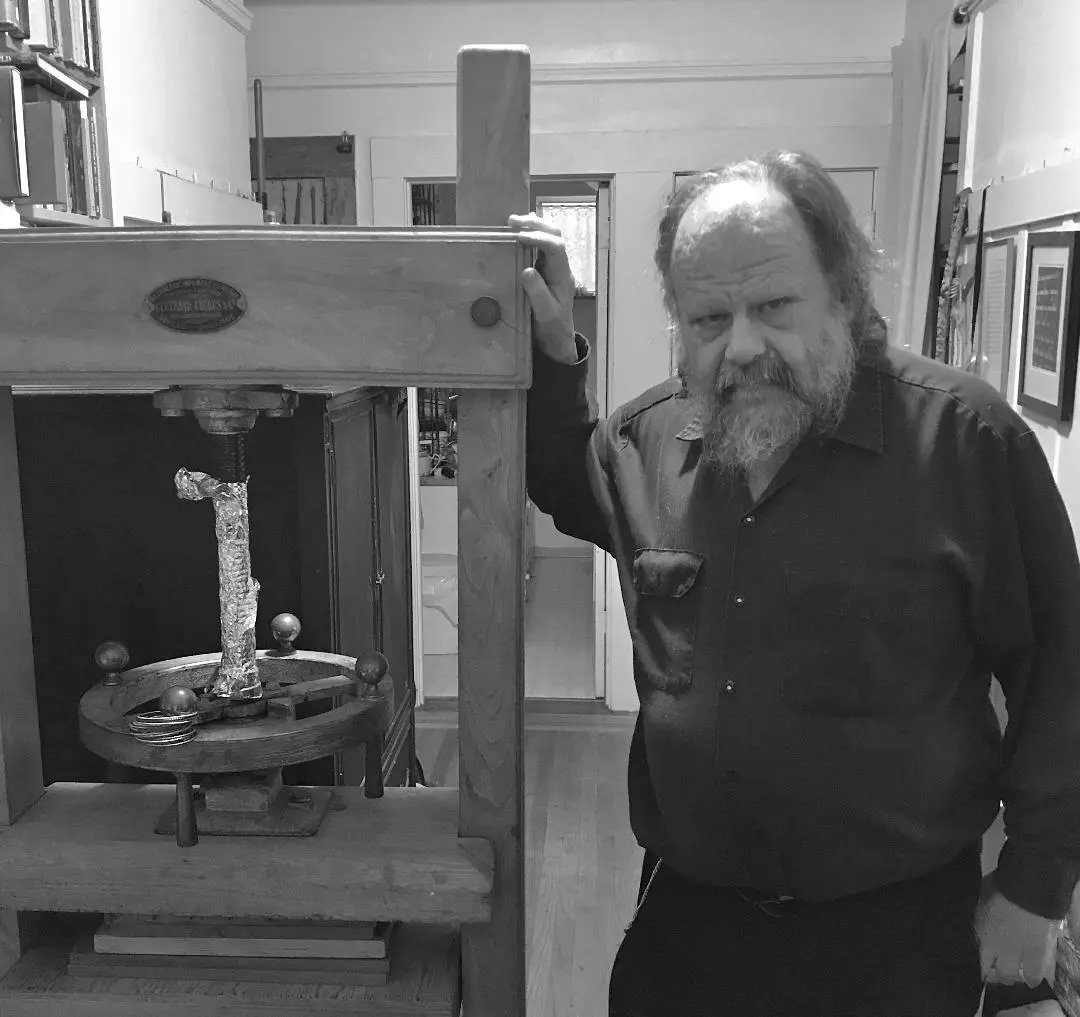
Tom Conroy, historian of bookbinding and skilled practitioner, died on Nov. 11 in his North Berkeley home. He was 73.
Tom was a working historian or, perhaps, an experimental archaeologist of the book. Not only did he train as a librarian, he studied bookbinding and conservation at Berkeley’s Capricornus School of Bookbinding and Art Restoration, a highly respected school established by Theo and Anne Kahle.
He also wrote about nineteenth-century toolmaking for bookbinding and woodworking. With Tom’s passing, there will be a huge gap left in the quality of original research and the synthesis of practical experience produced by his encyclopedic knowledge of the history of the book and his considerable bench skills.
Tom researched bookbinding toolmakers in England and in the United States, tracking down a particular tool to its likely origin based on a few clues from the tool itself. Tom published foundational articles on numerous topics ranging from the finishing tools employed by Irish and Scottish binders, a genealogy of American binders, a biography of 20th-century binder Jean Eschmann, Irish floodgrass bindings, and Scottish wheel bindings; his yet-unpublished research includes excellent work on backing hammers and bookbinding ploughs. During his life he was respected by and consulted by numerous colleagues on the history of bookbinding tools and machinery. His family of the book is grieving the loss of a brilliant mind and generous friend.
They also mourn the loss of a man of both tenderness and wit, who could spout Victorian verse or dirty limericks or both to entertain a friend driving him to an airport, who could repeat the entire sequence of Abbott and Costello’s fabulous bit “Who’s On First?” and tear your face off if you tried to edit his writing and messed up his punctuation and flow in the process. He could tango with the best of them and never stopped his research with the idea that he had “found everything there was to find.” He knew better.
-Nicholas Yeager
I have lived in Berkeley for 35 years, a few blocks away from Tom's house on Edith Street. Over these years I have known Tom and will miss his familiar figure, out and about. I have seen him walking around Berkeley or sometimes sitting on the sidewalk outside the bookstore, reading intently, in the Conroy style. I often stopped to give him a ride.
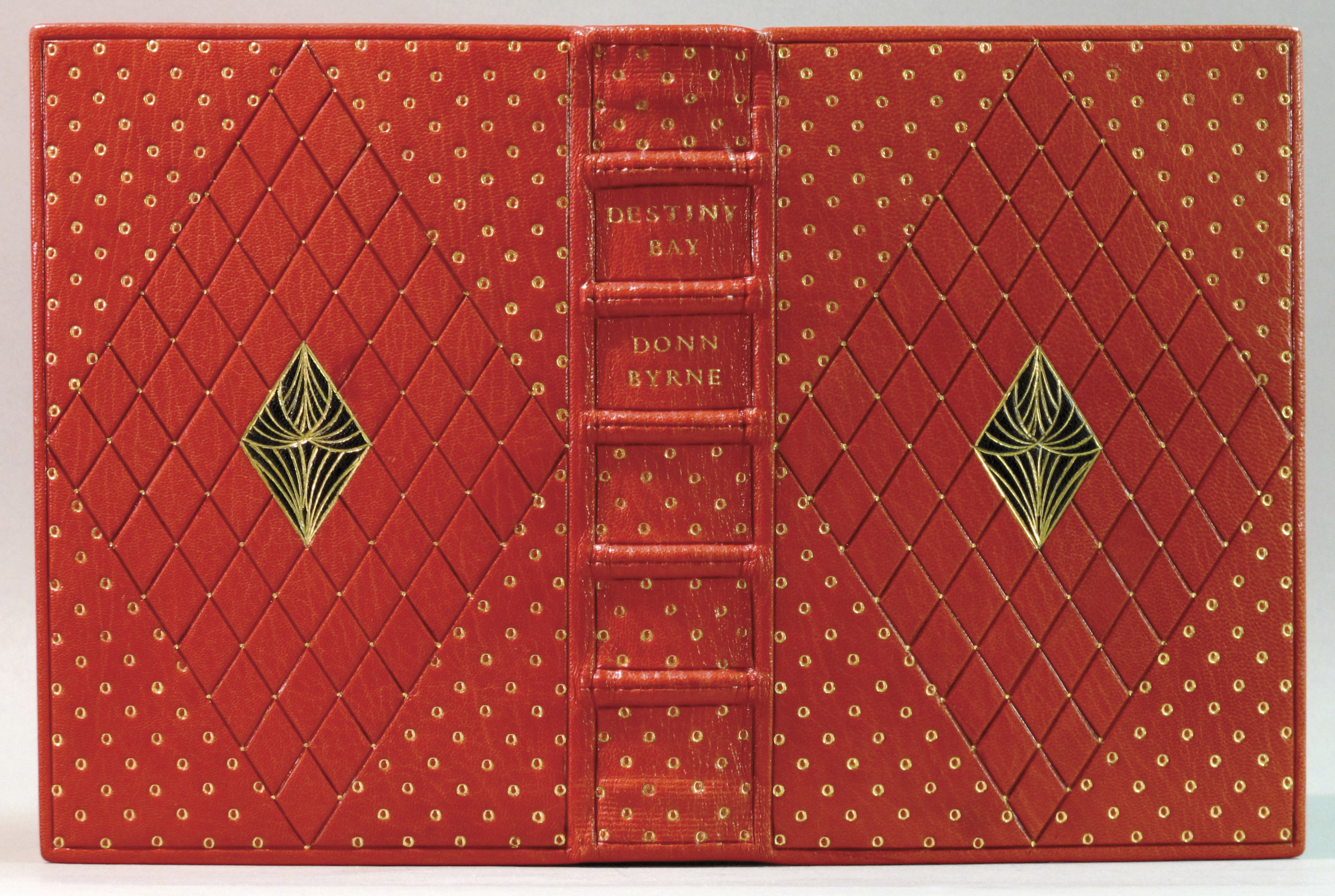
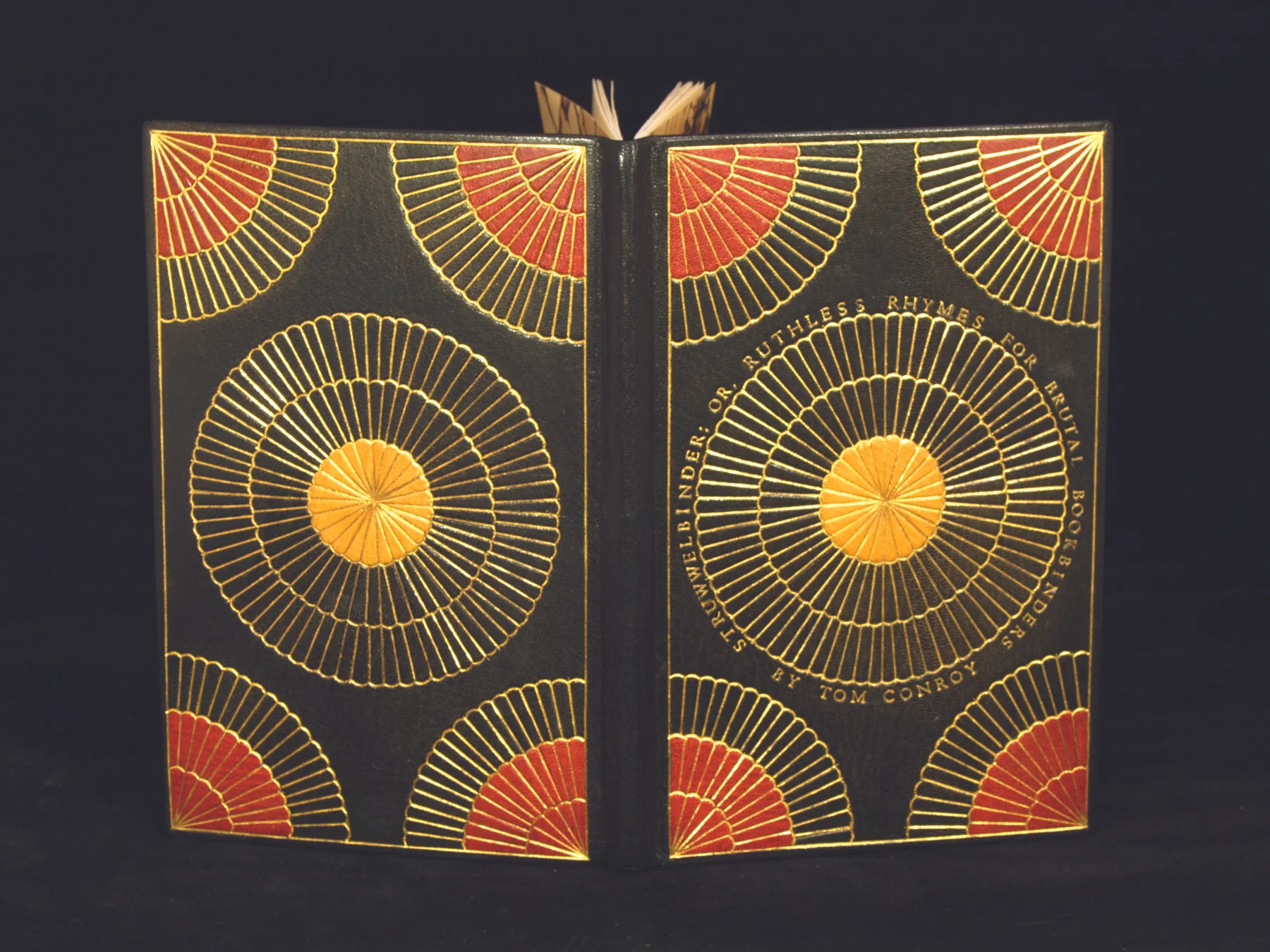
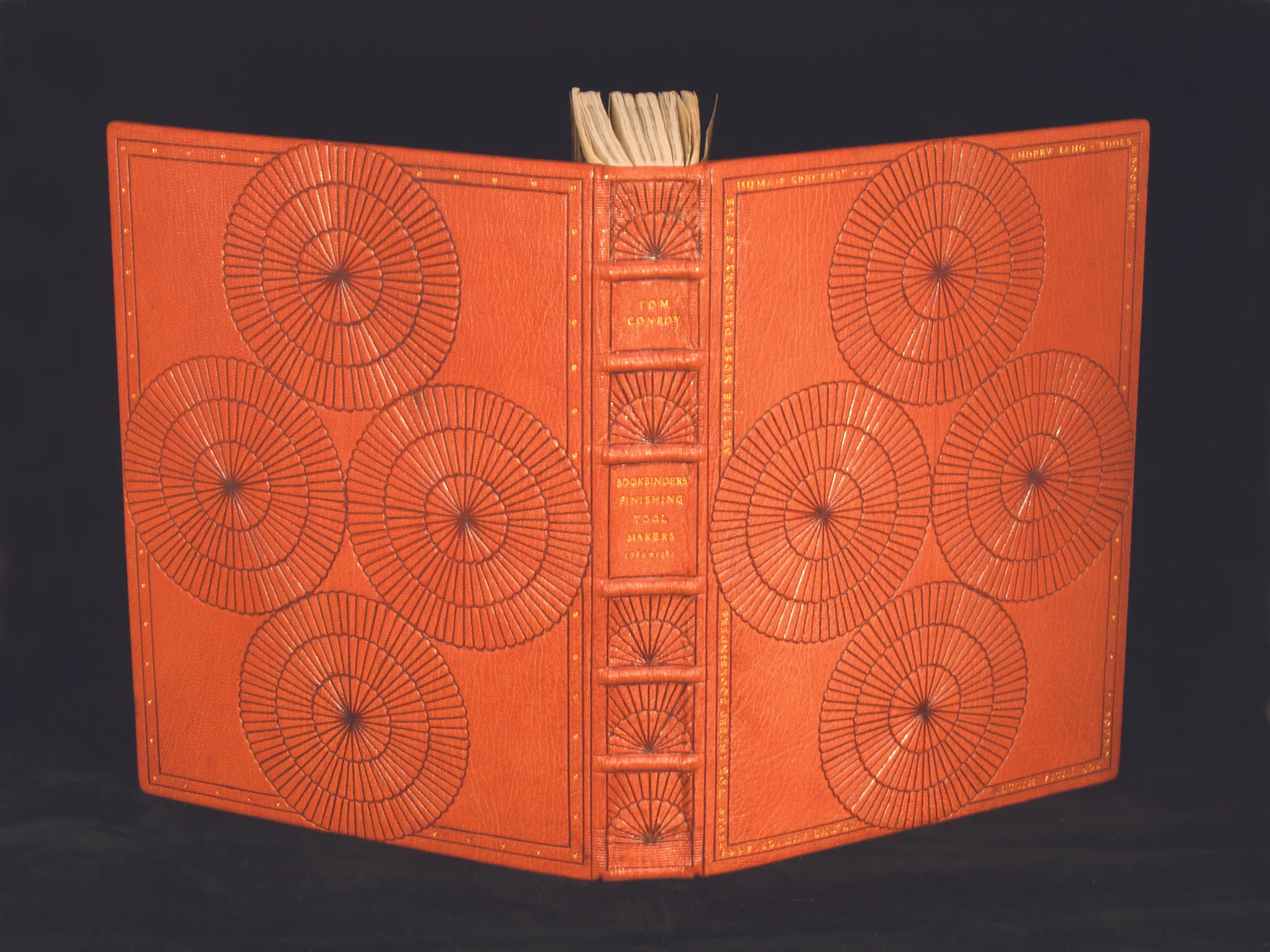
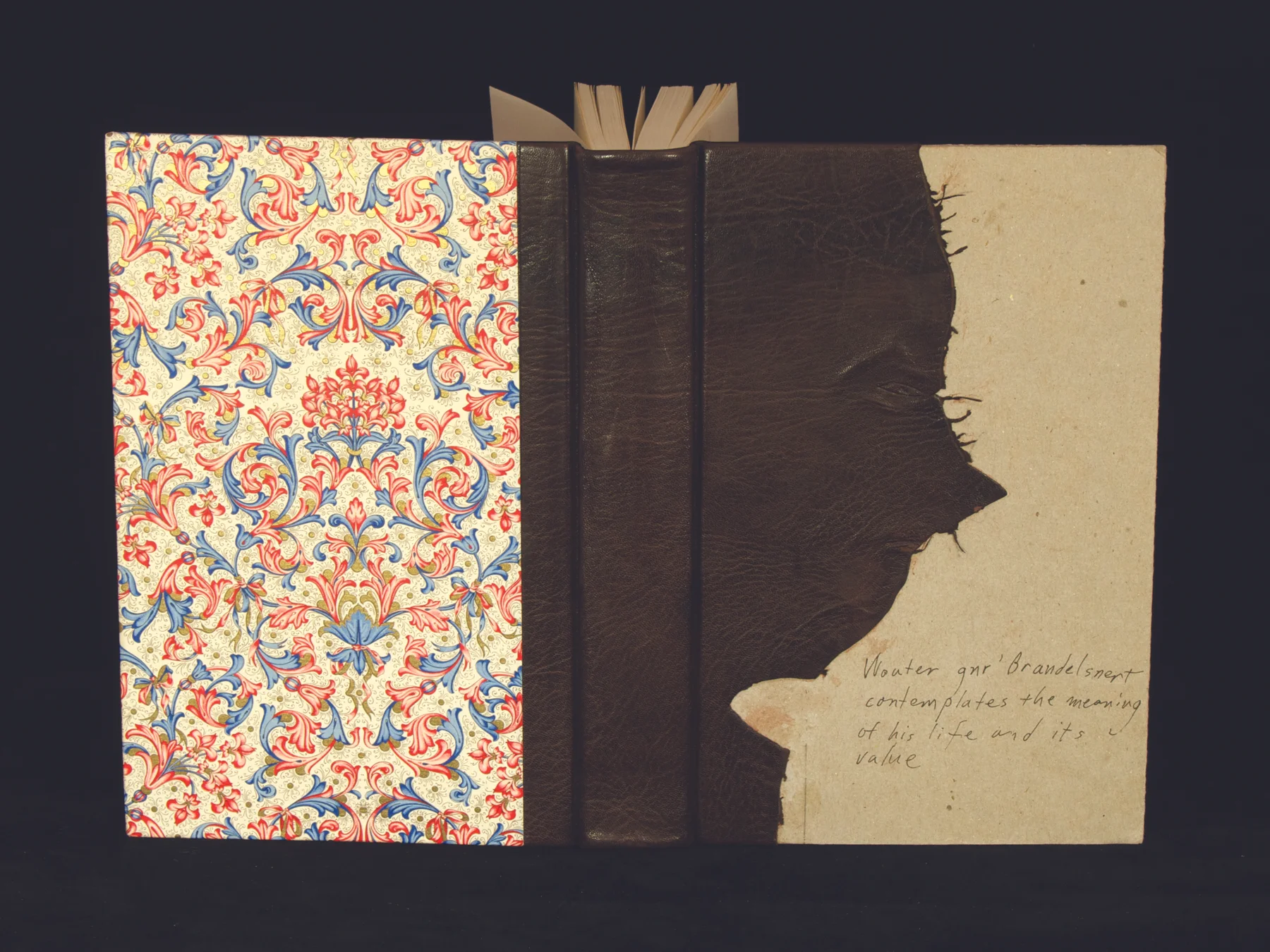
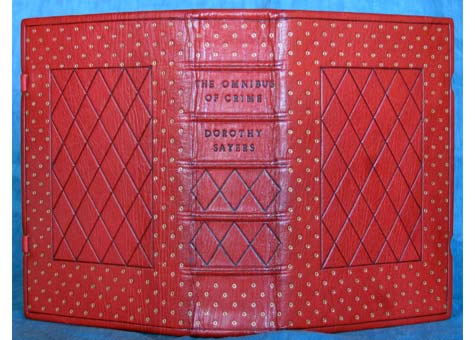
He was involved locally in the Hand Bookbinders of California; he contributed to the running of the organization and exhibited his bindings in their yearly show.
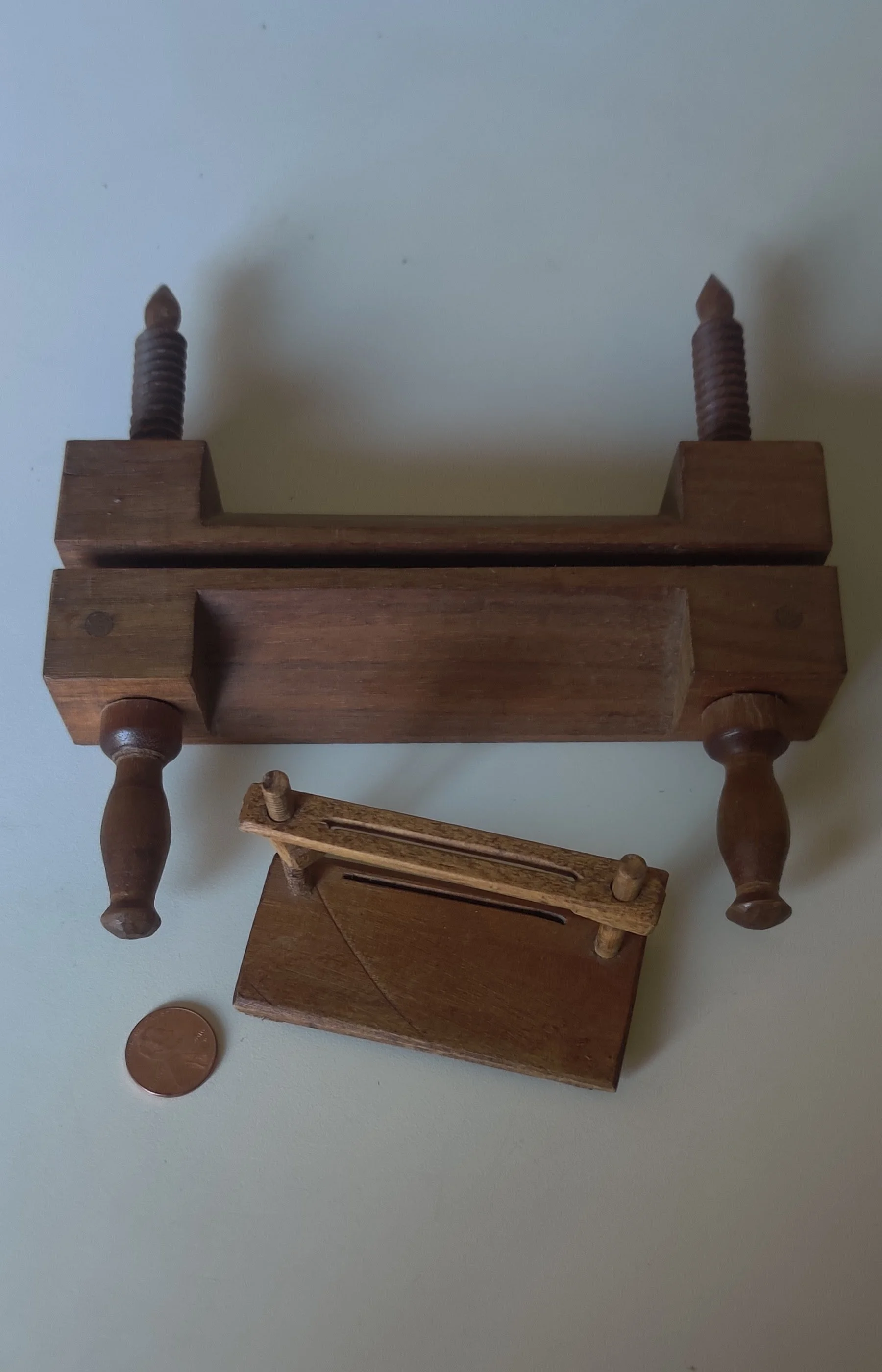
I would visit him to talk about bookbinding history and his woodworking knowledge. He made me a standard laying press as well as a beautifully crafted miniature one. Tom also made me a miniature sewing frame when I was thinking of binding miniature books.
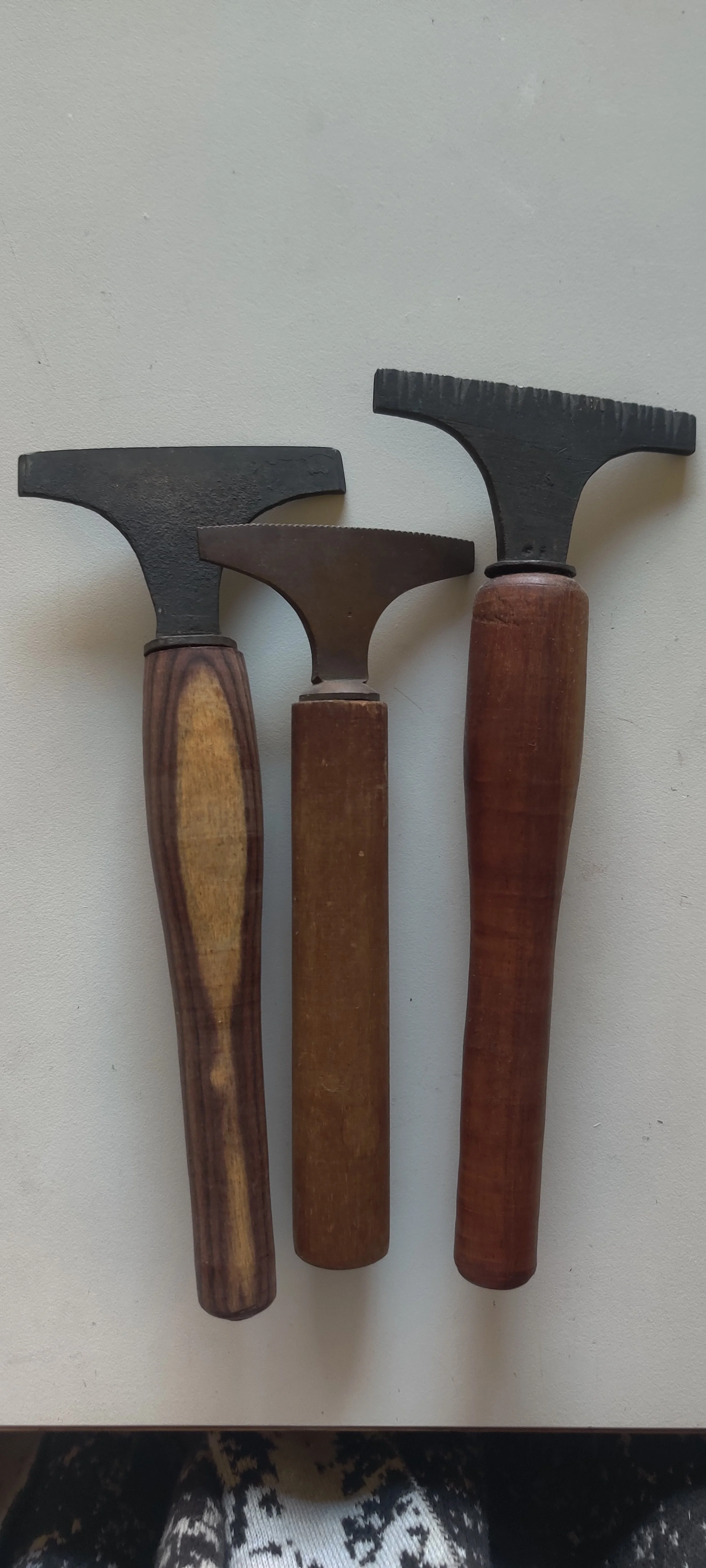
I also treasure the tool handles he fabricated, insisting that the asbestos handles on the finishing tools that Mr. Cockerell had given me were too dangerous. He replaced them with exotic wooden handles that he sourced from MacBeath Lumber on Ashby Avenue in Berkeley. Tom had a deep knowledge of bookbinding materials, particularly the various species of wood appropriate to the job. He was a truly skilled woodworker and turner.
He has been an enormous resource to the conservation bookbinding community. Many of us turned to him for information about the history of our profession and its materials. He was well known and respected locally, nationally, and internationally. He wrote articles and regularly gave talks at conferences. He would chastise me for my lack of discipline, and I apologize to him and our community at large for not writing about him with more detail and rigor! I am aware that I have not included the references, footnotes, and scholarly apparatus that he would always insist on, only touching on some of his contributions and achievements.
Tom’s friends and colleagues all appreciated his unwavering commitment to rigorous, comprehensive research, and his passing will leave a void in our community; he will be sorely missed.
Farewell, Tom.
(To read a more comprehensive obituary of his life and achievements see the Berkeleyside article written by his neighbour, Alan Bernheimer https://www.berkeleyside.org/2025/11/21/tom-conroy-obituary )
-Gillian Boal
In September of 2000, with the y2k scare safely in the rearview mirror, I found myself recently married and newly relocated to San Francisco. I had met Dominic Riley at PBI the year before, so he introduced me around and encouraged me to get involved with the Hand Bookbinders of California. It was through HBC that I became aware of the bookbinding community in the Bay Area and where I initially got to know Tom Conroy.
While Tom and I approached bookbinding from very different perspectives, we enjoyed a good deal of camaraderie as well as many lively discussions. And of course, Tom was always right, even on the rare occasions where he might have been incorrect. Eventually, as I began building up my home studio, I asked Tom to help me with some of the pieces I needed. Over the course of a few months at Tom's house in Berkeley, we hand-crafted a sewing frame that can be collapsed and which also has two crossbars for different supports (complete with a knocking down stick) and a finishing press.
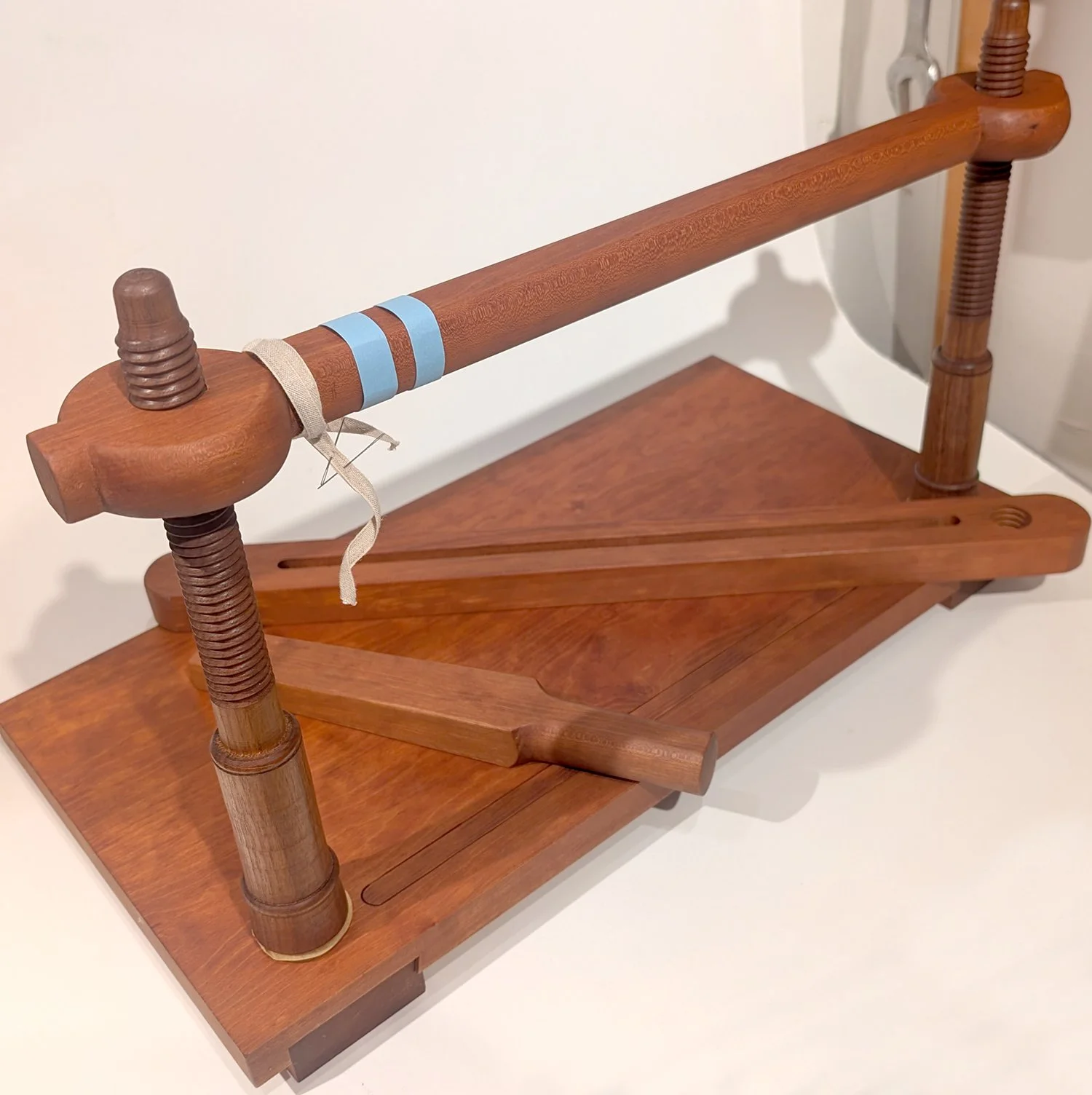
Suffice it to say that I still use and cherish these tools in my bindery. But I also cherish the memory, the process, and the journey we went on to create them. We started with a trip to MacBeath Hardwoods in Berkeley to buy the solid pieces of cherry and walnut that we would use. Tom walked me through rough-cutting and shaping of everything, right down to hand-turning the wooden screws both tools needed. We sanded, polished, and oiled the final surfaces. We even melted lead weights in Tom's kitchen to pour into the center of the knocking down stick to give it heft.
Ultimately, my career path led me to becoming a letterpress printer and educator more than a traditional bookbinder. Making books became more of an avocation than my paying vocation. But I still maintain my bindery at home, and look forward to greater chunks of free time to pursue making books. All that said, not only do I still value the tools I built with Tom, I truly appreciate the care he took in showing me not just how it was done, but why it was done that way, and that doing things properly still matters.
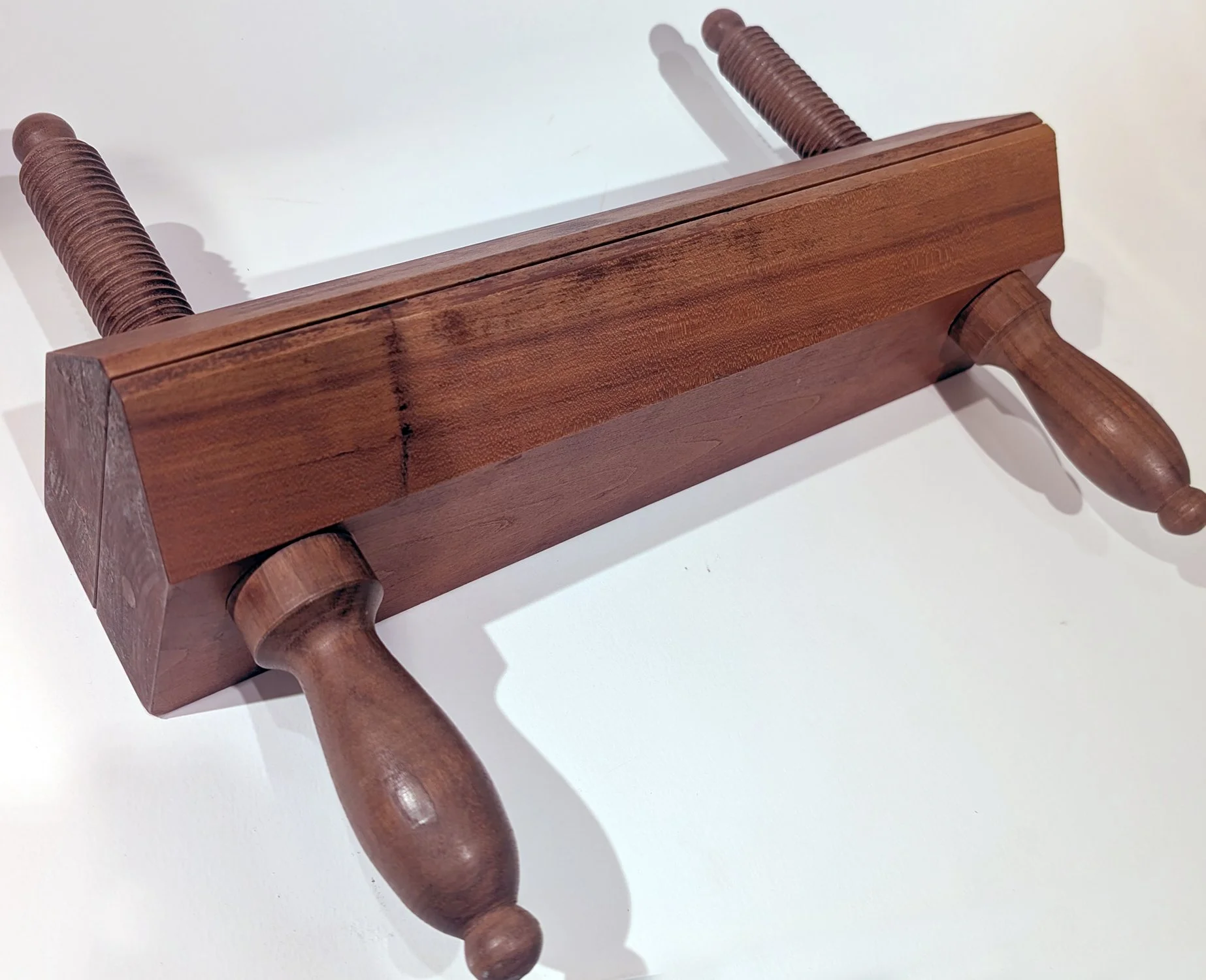
So now, nearly 25 years later, as I am now adding my own letterpress shop to my home studio, my approach reflects the time Tom spent with me. I have an iron handpress, and the printing goes slow as hell. There is no motor or power cord needed on my Reliance, and my plan is to only print from hand-set type. The inking is done with a two-handed brayer and requires multiple passes. I move deliberately, thinking of the how, the why, and focusing on what matters. And when I finally have enough time to set and print a full book, I'll sew it on the frame and finish it in the press I built together with Tom. Because the how and the why are also a big part of why it matters.
Thank you, Tom.